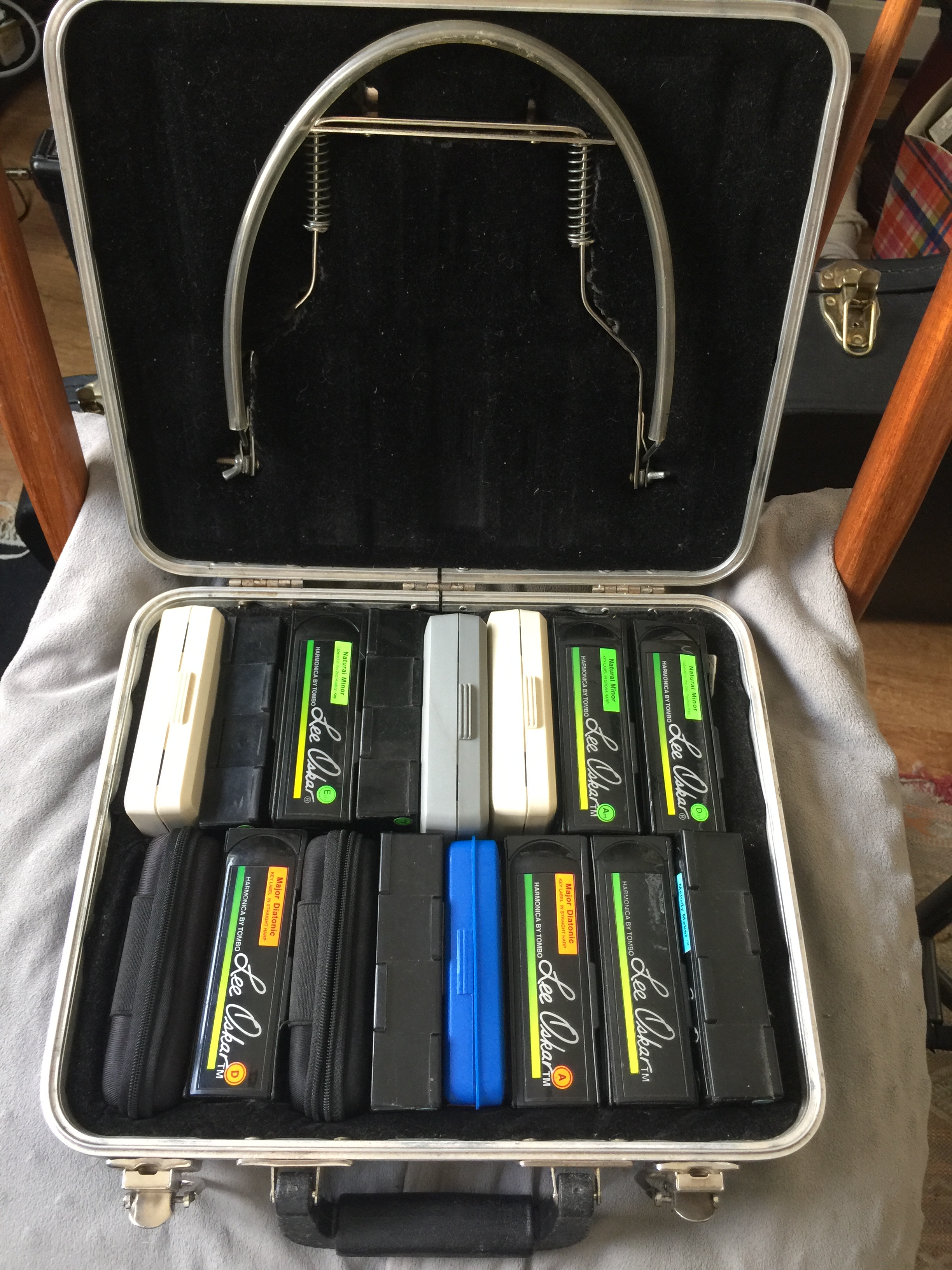
Can a person ever have too many harmonicas? I don’t think so. Harmonicas are great! They are portable, and durable, and surprisingly few people choose to play this amazing, accessible instrument. I’m going to write about harmonicas and my experience with them in general for this post.
The first harmonica I can remember playing was an old, literally broken one that a friend gave me back in high school. One side of it was held together with duct tape! I didn’t know it at the time, but it was a tremolo harmonica, which is pretty different from your typical mouth harp. I messed around with it a bit, but it didn’t catch my interest. Perhaps that’s what most people’s first experience is like with a harp.
Harmonica is best used in accompaniment with other instruments. Alone, it typically sounds thin and without using advanced techniques it will feel like a one trick pony. So, just picking one up and giving it a few blows is not too exciting. Then, it takes plenty of practice to get good at playing single notes and learning how the thing works before you can really play with confidence.
Enter, the rack. A harmonica is often held in a thing around the neck so that you can free up the hands. I received one of these, and a harp or two, as gifts from my family members being supportive of a healthy hobby and wanting decent Christmas gifts for a teenager. I was already playing my acoustic guitar pretty well and having it to accompany the harmonica made a big difference. I could learn at my own pace, really feeling out how the harp responded to what the guitar was doing. The extra coordination of breathing and moving the lips around was a welcome challenge too.
Now, I was at that beginner level for quite a while. I accumulated a few harps for my most used keys, G, C, and D. I could feel my way around the instrument well enough and blow along in time with a guitar. It’s a very folky sound and it works! I could also pull off the blues and figured out how to “bend” notes for that recognizable blues harp sound. For years, I didn’t attempt to progress further than that with harmonica. Playing harp this way over enough time, however, helped my technique to the point that I developed the muscle memory to play it pretty well technically. Yet, I didn’t know what the notes were that I was playing, the music theory behind the physical thing.
Enter, long work commutes with traffic. My harp playing took off from the driver’s seat of a car. I had started a job with a long, slow commute. I decided to keep a harmonica ready to blow away the gridlock. This way, I started to focus on scales and intervals. I started exploring different “positions” on the harmonica, which is playing it in different keys using a single harp. I would figure out how to play melodies from memory. Once I realized that I was getting much better at the instrument, I started exploring what types of harmonicas are out there.
A standard harp has ten holes and is tuned to a major key, a diatonic scale, using a “Richter tuning” order of notes. They are tuned to that key, yet you can get harps that have equal temperament tuning, which is like piano tuning, as they can play in various positions without coloring the harmony too much. A good example for the difference is blues harp. A regular harp playing a pentatonic scale in second position will have the characteristic blues harp sound. An equal temperament tuned harp playing a pentatonic scale in second position will sound the same as playing a pentatonic in first position. It’s subtle, but it can make the difference.
I got two equal temperament tuned harps in the keys of C and A. I used these to practice my pentatonic scales while listening to the radio because I could access the pentatonic scales of C, A, G, E, D, and F in any style with only these two harps. Harp has really helped me learn more about theory in general and how to improvise with other music, whatever it is.
I then got into minor tuning, melodic tuning, chromatic, pentatonic, and even circled back to tremolo harps. I am continually practicing these varieties. I don’t have such a long commute anymore, and I don’t find the time to commit to harp like I used to, but I now have a solid foundation for getting better at these unique types. What’s been really fun is learning to use a microphone with them!
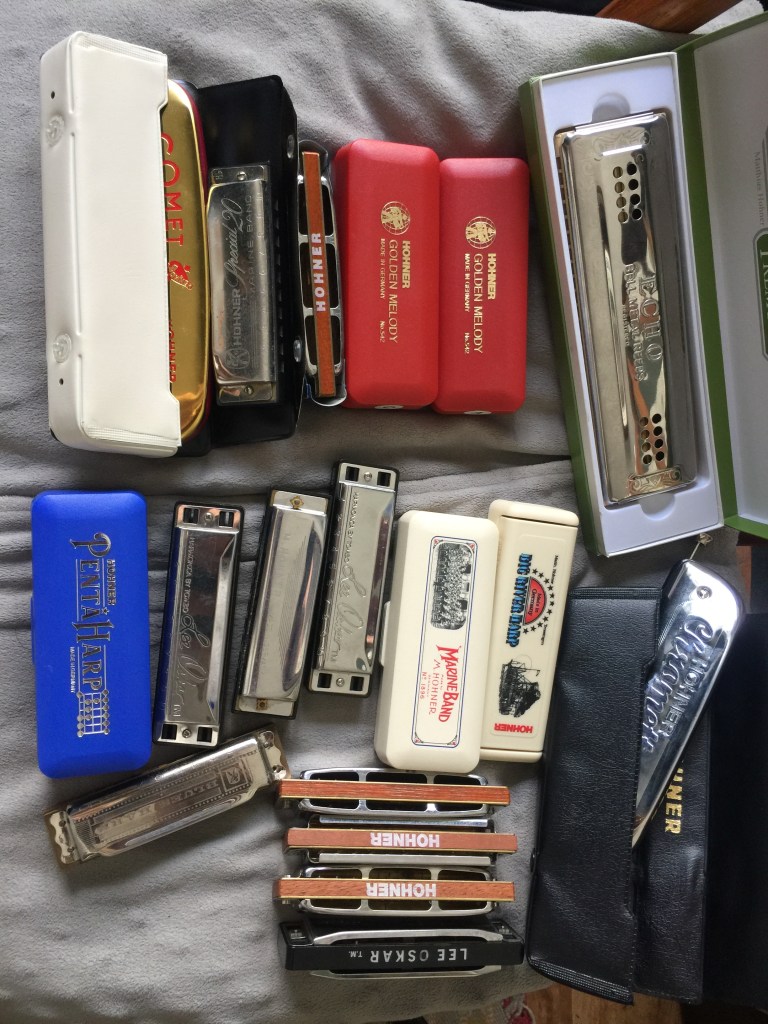
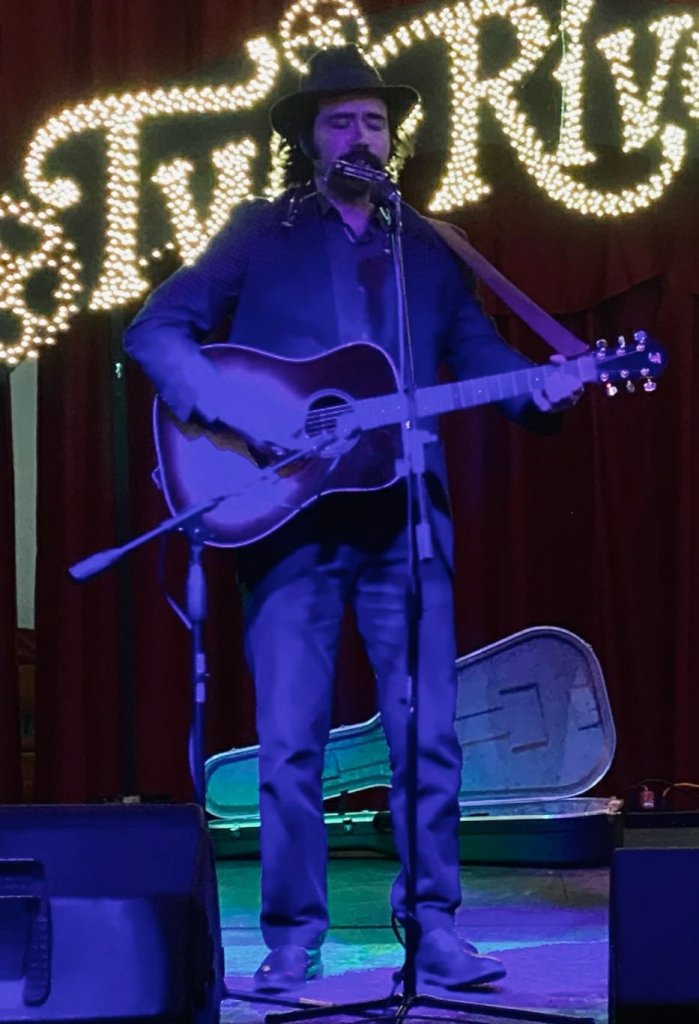
Harmonica is now a standard part of my performances. I will also take them along to jams. They are a great accompaniment to the styles I play, and now that I have gathered a collection of them, I am ready to play nearly any song that comes around. Even if there is already another harp player, I can figure out a way to play differently enough from them so that we don’t get in each other’s way. Why not, I’m a harmonica player!
If there are odd images below, those are WordPress ads. That’s what I get for a free website!
 Three Armed Bandit